01
What it is
Mutations in the TTN gene, which codes for titin — the largest protein in the human body and essential to muscle function.

Understanding the Disease
Knowledge is the first act of love.
Titinopathy affects titin — the body's largest protein — which holds muscle together. When titin is faulty, the muscles that move us, feed us, and let us breathe cannot do their work.
The basics
A group of genetic muscle conditions caused by mutations in the TTN gene. Severity varies, but the congenital forms can be life-threatening from birth.
01
Mutations in the TTN gene, which codes for titin — the largest protein in the human body and essential to muscle function.
02
In severe congenital forms it affects breathing, feeding, and movement from birth, often requiring intensive respiratory support.
03
Early genetic screening gives families time to prepare, plan care, and make informed choices with their medical team.
During pregnancy
Every pregnancy is different. But these are worth speaking up about with your midwife or hospital. If you feel something is wrong, trust your instinct.
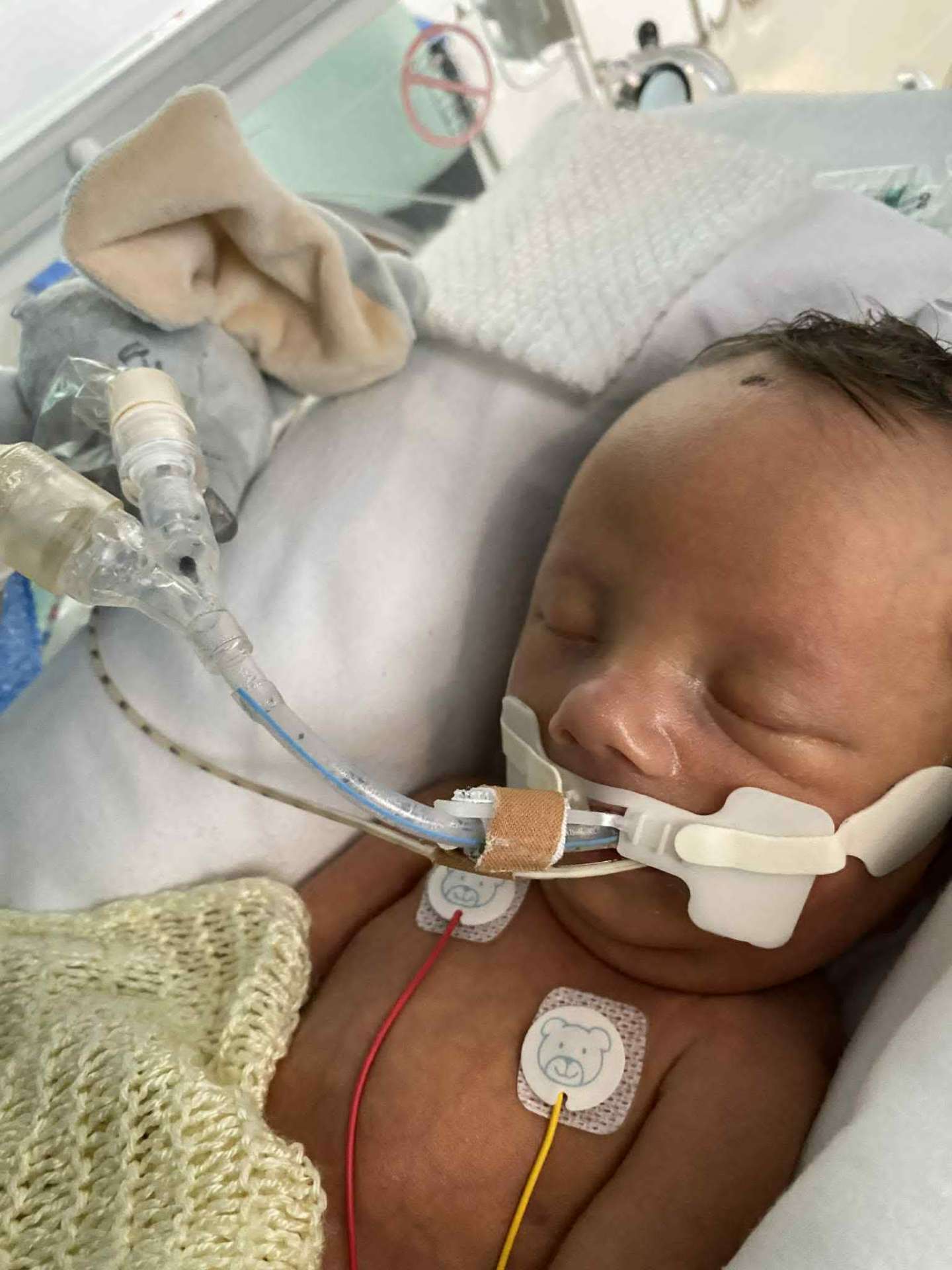
"Fighting to breathe. Fighting to stay."
Important: This page is for awareness only and does not replace medical advice. Always speak with your midwife, obstetrician, or GP. You have every right to insist on further investigation.
Reduced or absent fetal movement — fewer kicks than expected, or movement that slows down rather than building up.
Polyhydramnios (excess amniotic fluid) detected on scan — a possible sign the baby is not swallowing normally.
Concerns raised during routine scans about muscle tone or limb positioning.
A family history of muscular or neuromuscular conditions on either side.
A persistent feeling that something is not right — your instinct as a mother matters and deserves to be investigated.
Frequently Asked
Clear, plain-language answers about Titinopathy, the TTN gene, diagnosis, and UK support — for families, expecting parents, and clinicians.
Titinopathy is a group of rare genetic muscle diseases caused by mutations in the TTN gene, which codes for titin — the largest protein in the human body. In severe congenital forms, it causes profound muscle weakness, feeding and breathing difficulties from birth, and often requires intensive respiratory support.
Symptoms of severe congenital Titinopathy can begin before birth: reduced or absent fetal movement, polyhydramnios (excess amniotic fluid), and joint contractures. After birth, babies may show low muscle tone (hypotonia), weak cry, difficulty feeding, and respiratory failure requiring NICU care.
Diagnosis is confirmed through genetic testing — usually whole-exome or targeted TTN gene sequencing. Because TTN is the largest gene in the human genome, sequencing can be slow, and many families face a long wait between suspicion and confirmed diagnosis.
Yes — carrier screening, detailed ultrasound scans, and prenatal genetic testing (CVS or amniocentesis) can flag risk when there is a family history or when scans show reduced fetal movement or polyhydramnios. If you have any concern, you have the right to ask for genetic counselling.
Most severe congenital Titinopathies are autosomal recessive — both parents carry one copy of the faulty TTN gene, usually without knowing. Each pregnancy carries a 1-in-4 chance the baby will be affected. Some milder forms are dominantly inherited.
There is currently no cure. Care focuses on respiratory support, feeding support, physiotherapy, and palliative care in the most severe cases. Research into gene therapy for muscle diseases is progressing, and Noah's Gift Foundation exists to raise awareness and support that future.
In the UK, families can seek genetic counselling through the NHS, connect with Muscular Dystrophy UK, contact Addenbrooke's Hospital for specialist neuromuscular care, and reach Noah's Gift Foundation directly for peer support and signposting.
Trusted Resources
Muscular Dystrophy UK
Information and support for families affected by muscle-wasting conditions.
Visit
NHS — Genetic & genomic testing
Overview of NHS genetic testing services available in the UK.
Visit
Addenbrooke's Hospital — NICU
The NICU team who cared for Noah, and who continue to support families.
Visit
Tommy's — Pregnancy concerns
Guidance on what to do if you are worried about your baby's movements.
Visit